The Empire Mini GS Manual offers concise guidance for new users. It covers assembly, power setup, trigger operation, and safety checks. Users can quickly locate firmware updates, troubleshoot common issues, and access support resources for optimal performance. Keep the device clean for reliable use daily!
Overview of the Mini GS
Users consult the Empire Mini GS Manual for diagrams, part lists, and troubleshoot steps. The manual offers a quick‑start guide covering setup, battery installation, trigger calibration. It lists upgrades like improved barrel inserts, upgraded gearbox components, and aftermarket firmware options. Empire’s support team is available via phone or email to resolve issues, and the warranty covers manufacturing defects for a specified period!!! Enjoy!!
Key Features
The Empire Mini GS Manual highlights several key features that make this system a popular choice among hobbyists. First, the power supply is designed for 12 V or 24 V battery packs, with clear instructions for connecting and testing the battery to ensure the solenoid receives the correct voltage. The manual emphasizes the importance of checking the battery connection before activating the trigger, as a mis‑wired battery can prevent the solenoid from clicking. Second, the trigger and microswitch assembly is described in detail. The microswitch is located inside the grip frame, and the manual instructs users to activate it manually to verify that the trigger pre‑travel does not hold the switch in an activated position. Third, the solenoid itself is a critical component; the manual notes that if the solenoid does not click when the eyes are off, the most likely culprit is a faulty solenoid, and only an Empire technician can confirm this. Fourth, the board is highlighted as a robust component; the manual states that swapping the board is highly unlikely to result in two dead boards, so users can focus on other components. Fifth, the system comes with a warranty that covers manufacturing defects, and the manual advises calling Empire support for any warranty claims. The support team is described as responsive and helpful. Finally, the manual includes maintenance tips: clean the system regularly, apply grease to the O‑rings and bolts, and keep the device in good condition for many years. These features collectively ensure reliable performance and ease of use for both new and experienced users. Additionally, the manual explains that users can choose field modes that suit their play style, such as semi‑automatic with no ramping to conserve paint, and that the Mini GS is compatible with aftermarket upgrades like improved barrels and gearbox components. The guide also encourages experimentation with mods for a few weeks to a month, allowing users to gauge performance before committing to permanent changes. All of these aspects are designed to provide a smooth, enjoyable experience while maintaining the Mini GS’s reputation for durability and precision. The Empire Mini GS Manual serves as a comprehensive reference for all aspects of operation, maintenance, and customization, ensuring users can fully exploit the system’s capabilities.

Initial Setup and Power Configuration
Connect a 12 V or 24 V battery to the power jack, then test the solenoid click with the eyes off. If no click, re‑check battery polarity and microswitch activation. Ensure the trigger pre‑travel does not hold the switch. Follow the manual’s safety steps! soon.
Power Supply Requirements
The Empire Mini GS requires a regulated 12 V DC power supply for optimal performance. The manual specifies a minimum current rating of 2 A to accommodate peak draw during firing cycles. Users should choose a battery or adapter that maintains voltage within ±5 % under load. For field use, a sealed lead‑acid (SLA) battery rated at 12 V, 20 Ah is recommended, providing sufficient runtime for extended sessions. If a rechargeable lithium‑ion pack is preferred, ensure it outputs 12 V with a built‑in voltage regulator and a current limit of at least 3 A. The power jack is located on the rear panel; connect it using the supplied 5‑pin connector, matching polarity as indicated by the red (+) and black (–) markings. Before powering on, verify that the battery terminals are clean and free of corrosion, and that the connector is seated firmly. The manual advises using a multimeter to confirm the output voltage before insertion. A voltage drop below 11.5 V may cause the solenoid to fail to click, while exceeding 12.5 V risks overheating the internal circuitry. The Mini GS also features a built‑in voltage monitor; a flashing LED indicates a low‑power condition. In such cases, replace or recharge the battery immediately to avoid performance degradation. For users who wish to integrate a DC‑DC converter, the device accepts input up to 24 V, but the converter must step down to 12 V with a minimum 2 A output. Finally, the manual recommends installing a fuse rated at 3 A in series with the power line to protect against short circuits. Proper power supply selection and maintenance are crucial for reliable operation and longevity of the Mini GS system. Regular voltage monitoring is essential; check the supply before each session to ensure it stays within the 12 V ±5 % range. Documenting readings helps detect gradual drops that could affect solenoid performance over time. Keep logs for maintenance now! Consistent voltage checks and proper connections protect the Mini GS from sudden failures. Everywhere.

Battery Installation and Testing
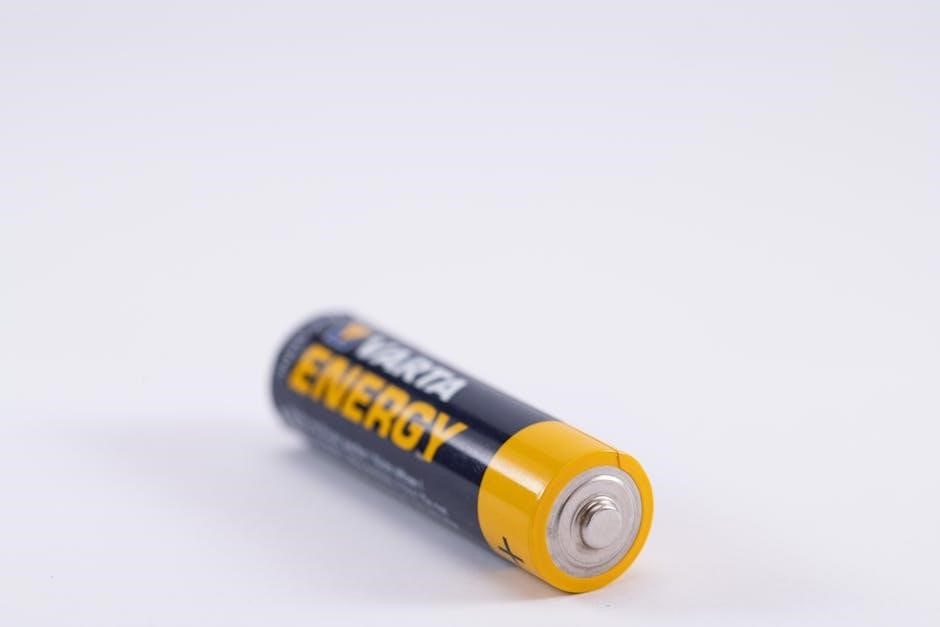
Installing the battery on the Empire Mini GS is a straightforward process that ensures reliable power delivery and longevity. First, power off the unit and disconnect the main power connector. Locate the battery compartment on the rear panel, marked with a battery icon. Open the compartment cover by sliding the latch or pressing the release button, depending on the model. Remove any old battery or debris, and inspect the contacts for corrosion. Clean the contacts with a cotton swab and isopropyl alcohol if necessary, then dry completely. Next, insert the new 12 V, 20 Ah sealed lead‑acid (SLA) battery, aligning the positive (+) terminal with the red contact and the negative (–) terminal with the black contact. Secure the battery with the provided screws or locking mechanism. Reattach the compartment cover, ensuring it clicks into place. Connect the 5‑pin power connector to the battery terminals, observing correct polarity. Verify that the connector is snug and the pins are not bent. After installation, perform a quick voltage test. Use a multimeter set to DC volts and touch the probes to the battery terminals. The reading should be between 12.0 V and 12.6 V; If the voltage is below 11.5 V, recharge or replace the battery before use. Once the voltage is confirmed, power on the Mini GS. Observe the solenoid click and the LED status indicator. If the solenoid does not click, double‑check the battery polarity and connections. For extended use, test the battery after several firing cycles to ensure it maintains voltage under load. Keep it charged. dry!
Trigger and Microswitch Activation
The trigger mechanism on the Empire Mini GS relies on a microswitch that is housed within the grip frame. To activate the microswitch manually, release the trigger and press the microswitch button located near the trigger pull. The button should click and the microswitch should be in the activated state. If the trigger pre‑travel is holding the microswitch in the activated position, the solenoid will not click. To test the microswitch, disable the trigger pre‑travel by pulling the trigger to the end of its travel and release it. The microswitch should return to the de‑activated state. If the microswitch remains activated, the trigger pre‑travel is likely mis‑aligned. Adjust the trigger pre‑travel by loosening the trigger screw and sliding the trigger until the microswitch is fully de‑activated at the end of the travel. Once the microswitch is correctly positioned, the solenoid should click when the trigger is pulled. If the solenoid still does not click, the microswitch may be defective. Replace the microswitch with a new one from the OEM parts list. After replacement, re‑install the trigger and test the solenoid again. If the solenoid clicks, the trigger and microswitch are functioning correctly. If the solenoid does not click, contact Empire support for further diagnostics. The microswitch is a critical component of the Mini GS and must be functioning correctly for safe operation. Keep the microswitch clean and free of debris to ensure reliable operation. During operation, always ensure the trigger is fully retracted before recharging the battery. The microswitch should be inspected for any signs of wear or corrosion. If corrosion is present, clean with a mild abrasive pad and apply a thin layer of silicone grease to the contacts. This will reduce resistance and improve reliability. Additionally, verify that the trigger lever is not binding on the frame; if binding occurs, adjust the trigger spring tension accordingly. A properly adjusted trigger will provide a smooth pull and consistent solenoid activation. Finally, test the trigger and microswitch after every major upgrade or modification to confirm that the system remains within specifications. This routine maintenance helps prevent unexpected failures during critical operations.

Firmware and Software Management
Update the Mini GS firmware via USB. Launch Empire Firmware Tool, choose the latest .bin, click Upload, then reboot. Refer to the Quick Start Guide for configuration and use the web interface to customize settings. After flashing, verify operation with the test mode
Firmware Update Procedure

Before beginning, ensure the Mini GS is fully charged and connected to a stable power source. Download the latest firmware file from the official Empire website, verifying the SHA‑256 checksum to confirm integrity. Store the file on a USB flash drive formatted to FAT32.

Insert the USB into the Mini GS’s port and power on the unit. The display will flash “UPDATING” as the firmware is detected. Use the Empire Firmware Tool on a PC: open the application, select “Connect,” and the device should appear in the device list. Click “Load Firmware,” navigate to the USB folder, and choose the .bin file. Confirm the version number before proceeding.
Click “Start Update” and wait for the progress bar to reach 100%. During this process, do not power off the Mini GS or disconnect the USB. Once completed, the unit will reboot automatically, and the display will show the new firmware version. Verify functionality by running a test cycle and checking the settings menu for the updated options.
If the update fails, reset the device to factory defaults via the reset button, repeat the steps, and ensure the USB drive is not corrupted. For persistent issues, contact Empire support with the error log located in the device’s memory. Keep the firmware file for future updates.
Advanced users can upload custom profiles via the web interface. Use XML files to tweak trigger timing, power curves, and safety limits. Back up the current configuration before changes, and test each profile in a safe environment.

Quick Start Guide
Begin by inserting the supplied 18650 battery into the rear compartment, aligning the positive (+) and negative (−) terminals as marked. Secure the latch and close the cover; the green LED should illuminate, indicating a proper connection.
Power on the Mini GS by pressing the main switch on the left side of the grip. A brief startup sequence will appear on the LCD, displaying firmware version and battery status. If the screen remains blank, check the battery contact and try a fresh charge.
Before firing, perform a safety check: ensure the trigger is in the neutral position and the safety lever (if present) is disengaged. Manually pull the trigger to confirm the microswitch activates; the solenoid click should be audible. If the click is missing, consult the troubleshooting section for solenoid diagnostics.
Set the desired firing mode by rotating the mode selector on the right side of the grip. For beginners, “Semi‑Auto” offers controlled practice. Adjust the power level with the dial on the left side; higher settings increase muzzle velocity but reduce battery life.

Now aim at a safe target and pull the trigger. The Mini GS will fire once the microswitch is engaged. Observe recoil and ensure the unit remains stable. After each shot, release the trigger and allow the system to cool for a few seconds before the next cycle.
After initial use, clean the barrel and trigger assembly with a soft brush and mild solvent. Apply a light coat of grease to the O‑rings and bolt to maintain smooth operation. Store the Mini GS in a dry, dust‑free environment when not in use. For extended use, schedule regular firmware updates and battery checks. Keep the manual handy for reference, and contact Empire support if any anomalies arise. Enjoy responsible and safe operation of your Empire Mini GS!

Customization Options
Empire Mini GS allows users to tweak performance via its firmware menu. After installing the latest update, you can adjust trigger latency, power curves, and safety interlocks directly from the LCD. Firmware updates are delivered over USB and can be installed with the companion software, ensuring you stay current.
Barrel swaps are simple: the standard 10‑inch barrel can be replaced with a 12‑inch or 14‑inch version for higher velocity, or a 9‑inch barrel for tighter control. Each barrel comes with a matching muzzle brake that can be swapped to fine‑tune recoil. The grip can be customized with interchangeable palm pads and trigger guards.
Electrical upgrades include higher‑capacity batteries, such as a 2‑cell 18650 pack, and upgraded solenoid modules that reduce click latency. The board is modular; you can install an Optimus board for advanced power management or a Shockwave board for higher output. All boards are hot‑swappable.
For advanced users, the Mini GS supports programmable firing sequences. Using the software, you can set a burst mode that fires a preset number of rounds with a defined delay. You can also calibrate the trigger to fire only when the microswitch is fully depressed, eliminating accidental discharges.
Remember to document every change you make. Keep a log of firmware versions, hardware swaps,and performance notes. This will help you troubleshoot future issues and share your setup with the community. With these customization options, the Empire Mini GS can evolve from a beginner’s platform into a finely tuned tool for experienced users.

Maintenance, Troubleshooting, and Warranty
Regular cleaning keeps the Mini GS reliable. Inspect and grease O‑rings, check battery voltage, and ensure the trigger microswitch is free. If the solenoid fails to click, test power, replace the battery, and verify the board. For warranty claims, call Empire Support promptly and keep firmware updated.!!!
Common Issues, Diagnostics, and Contacting Empire Support
When operating the Empire Mini GS, the most frequent complaints revolve around the solenoid not engaging, the trigger mechanism lagging, or the battery voltage appearing low during use. The first diagnostic step is a thorough visual inspection: verify that the battery is correctly seated, that the O‑rings around the grip frame are lubricated, and that the microswitch inside the trigger housing is clear of dust or debris. If the solenoid fails to click while the eyes are turned off, re‑insert the battery and double‑check the power supply connections. A dead or faulty board is unlikely if a replacement board has already been installed, yet a short in the solenoid coil can still produce a silent failure that is not obvious on the board. For trigger mis‑alignment, manually actuate the microswitch within the grip frame and confirm that the trigger pre‑travel does not keep the microswitch in an activated state. If the solenoid remains unresponsive after these checks, it is the most probable cause; only an Empire technician can definitively diagnose and repair the solenoid. To reach Empire Support, call the dedicated hotline or use the online support portal, providing the serial number, current firmware version, and a concise description of the symptoms. The support team is known for quick responses and will walk you through advanced diagnostic steps or arrange a repair under warranty if the unit is still covered. Keep the Mini GS Manual within easy reach during troubleshooting, as it contains reference diagrams and troubleshooting tables that can expedite the process and reduce downtime for your model. Refer manual now!